Why Anxiety About Sleep Doesn’t Actually Cause Insomnia
- Sep 18, 2025
- 2 min read
Updated: Apr 19
Disclaimer: I am not a licensed medical or psychiatric professional. The content on this blog is for educational and informational purposes only and is not a substitute for professional medical, mental health, or sleep-related advice, diagnosis, or treatment.

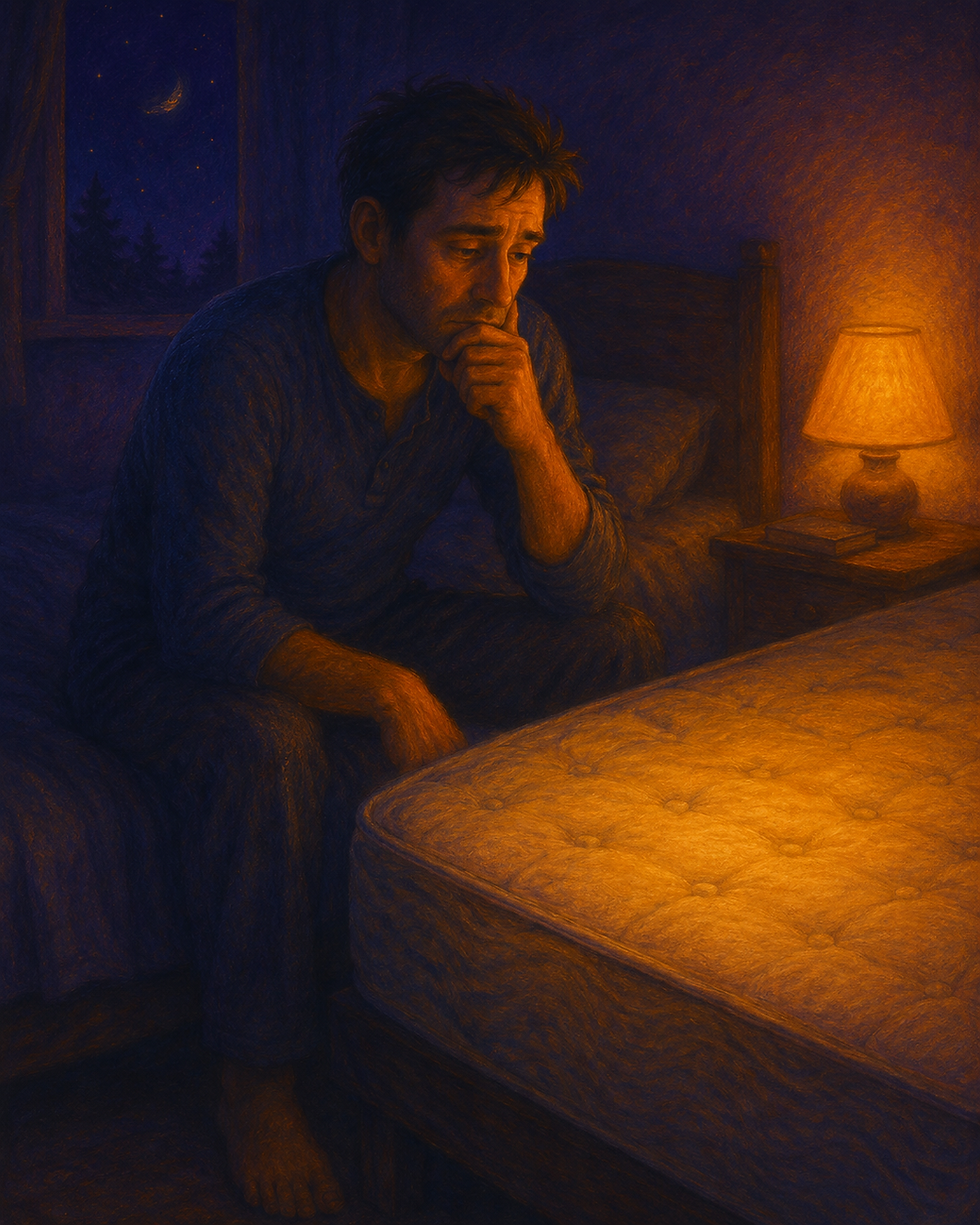
If you have insomnia, then chances are you're anxious that feeling anxious is going to guarantee you a bad night. It's very common, I had it too. We tell ourselves that sleep only happens when we are perfectly relaxed and tranquil, so when we feel emotions that are difficult, it's easy to become afraid of being afraid.
“If I feel anxious about insomnia, then I won't sleep tonight”
One of my clients recently told me they worried that that worrying about not sleeping causes a sleepless night. This fear is extremely common, very understandable, and not true.
If anxiety about sleep really caused insomnia, then no one would ever recover, because fear of not sleeping is the most common fear among insomniacs.
It seems like almost everyone suffering from insomnia has these anxieties, including everyone I've worked with. Yet these anxieties didn't prevent any of my clients from overcoming insomnia for good.
You'll discover this yourself the more you recover and you'll see how just because you had a lot of anxieties the night beforehand, you were able to sleep that night just fine. You'll start to realize more and more that your sleep isn't as fragile as you would think.
Your mind will always try to throw endless worries at you because that’s just what minds do. BUT...
It’s not that anxiety about sleep causes insomnia, but rather it’s insomnia that creates anxiety about sleep.
Examples
Many of my clients have “aha moments” when they sleep well despite less than perfect conditions such as:
Drinking coffee late in the afternoon
Forgetting melatonin
Sleeping in an unfamiliar hotel bed
Not using a sleep mask
Feeling anxious all day
And yet, despite all those issues they sleep soundly. These moments are powerful because they prove that sleep isn’t fragile and doesn't need absolute tip top perfect conditions.
Building sleep certainty
*Please note: I don't like to use the word confidence here because of the head-strong branding that's often associated with but it's the best word I can think of to convey this.
As you gain more experience with recovery, your perspective can't help but shift overtime:
Instead of fearing that anxiety means you won't get sleep, you start realizing you can sleep despite anxiety.
You start to deeply understand that sleep comes naturally and passively.
Conclusion: Just because you feel anxious about sleep doesn't mean you won't sleep.
Your worry about sleep is not the problem, but rather it's a symptom of the problem. As you progress, you’ll see that your body is capable of sleep despite the endless anxieties your mind throws at you.
And once you really internalize that truth, you’re well on your way to lasting recovery.


Comments