What Is the First Stage of Insomnia?
- Dec 7, 2025
- 6 min read
Updated: Apr 19
Disclaimer: I am not a licensed medical or psychiatric professional. The content on this blog is for educational and informational purposes only and is not a substitute for professional medical, mental health, or sleep-related advice, diagnosis, or treatment.

(Also: How Does Insomnia Begins, Early Warning Signs of Insomnia, Heart Palpitations, and more!)
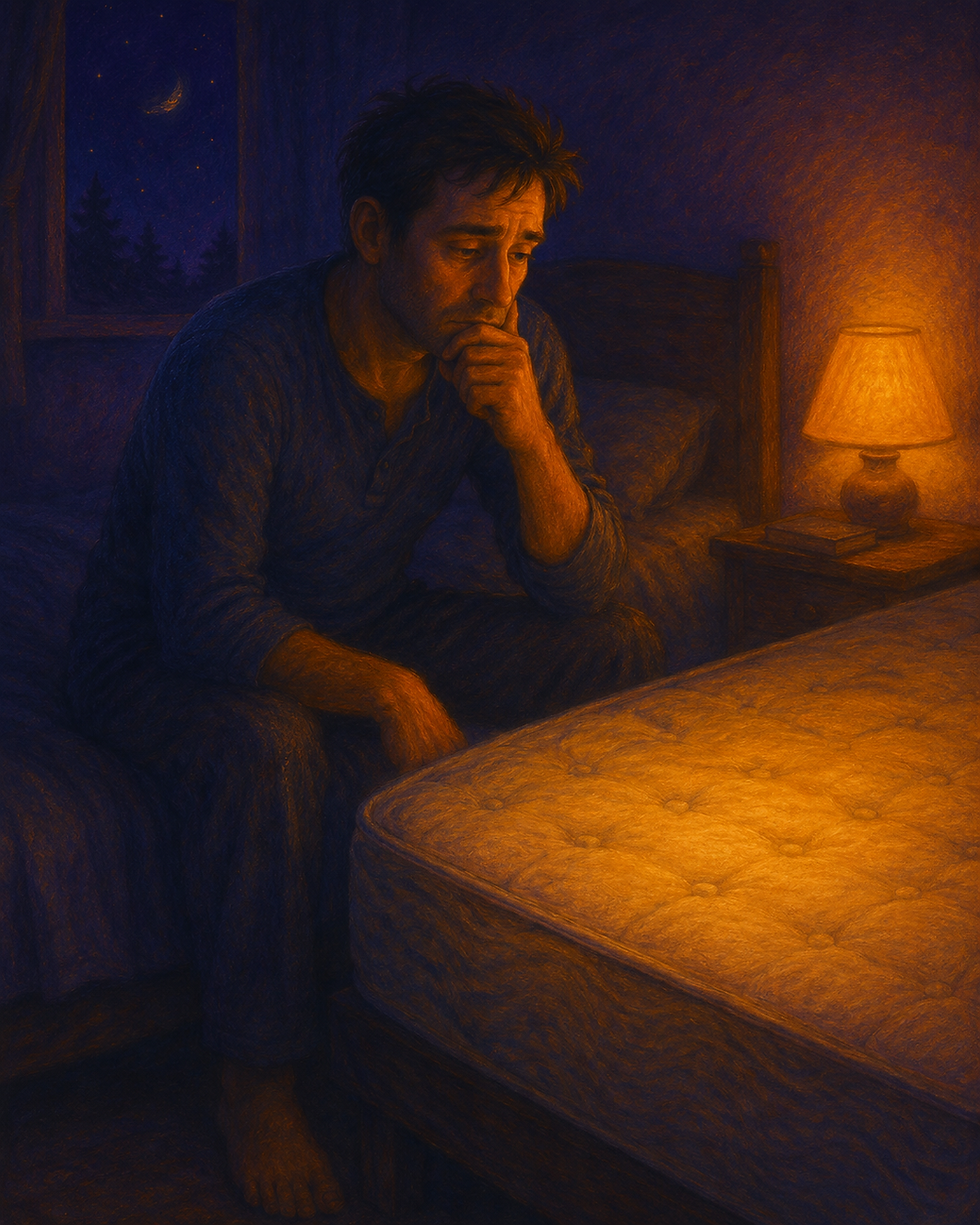
Usually people don't get out of bed one day after a bad night of sleep and think "Great, I have chronic insomnia now."
Insomnia usually starts from something very typical and benign. It could be some work related stress, a new baby maybe too much caffeine, etc. Then suddenly sleep feels like a problem that's on our radar that we have to definitely fix!
So what's the first stage of insomnia exactly? How does it begin exactly and what should look out for?
In this article we'll go through:
How insomnia begins
How to know if you're developing insomnia
Can insomnia cause heart palpitations?
Early warning signs to pay attention to
What the beginning of insomnia really looks like in day to day life
Please note: This article is educational and not a substitute for medical care. Always talk with a doctor about new or worrying symptoms, especially chest pain or palpitations.
How Does Insomnia Begin?
Let's take a closer look at this beginning process.
Usually people with chronic insomnia start off the process with normal, healthy sleep. There's nothing unusual about the situation and they don't think much of it.
Then something happens.
They experience some period of sleep disturbance that can come about from any number things. This could be from a noisy neighbor, travel, a new baby, or all of the above (or maybe for no good reason at all!).
At this point most people shrug it off and don't think much about it and go about their day. "I didn't sleep great last night. Oh well."
The alternative to this reaction is to give the lack of sleep more attention and deciding that lack of sleep was a problem.
This is where insomnia often begins.
Going down this path we start to:
Track our sleep almost obsessively
We start to google symptoms and insomnia horror stories early in the morning
You try to fight for sleep using supplements, sleep hygiene and calming rituals.
Every night starts to feel like a battle.
This is a perfectly understandable reaction. However what is unfortunate is that during this process we start showing our brain that being awake at night is bad and dangerous.
The more it has that unhealthy outlook, the more we struggle against sleep.
How Do I Know I’m an Insomniac?
It can be helpful to know if you've moved from rough patch to "insomnia land" territory. While there isn't a swab test available for insomnia it's relatively straightforward to determine if someone is suffering from it.
Let's go over the clinical diagnosis at first which is of course necessary for medical providers and then I'll provide what I think would be a more helpful criteria to know if you likely have insomnia.
According to the National Heart, Lung and Blood Institute (NHLBI), insomnia has these clinical signs1
Insomnia has these clinical signs:
Difficulty falling asleep, staying asleep, or waking too early
Whether it happens at least 3 nights a week
If it lasts for at least a few weeks to months
Does it cause daytime problems like fatigue, brain fog, irritability, low mood, or reduced performance
Insomnia Recovery
But beyond those, there are everyday signs and thinking patterns that your brain has shifted into “insomnia mode” that I think can be more helpful to determine if you're in the struggle.
Is your life shrinking around sleep? Do you avoid social plans just in case it has the hance to ruin your sleep? Do you turn down things that you actually want to do? Has sleep become the main priority and life gets the leftovers?
Are you constantly trying to fix and maintain your sleep? Have you made a number of purchases lately for tools like supplements, blue light blocking glasses? Do you have a number of meditation tracks ready to play at night?
Does a bad night of feel particularly catastrophic? Way more than it usually did before this all started? Are you tempted to call out of work?
If this sounds like you then do not be alarmed it doesn't mean you're doomed. You've simply learned to be scared of nighttime wakefulness. This is OK, if this is something we've learned then we can unlearn it.
Can Insomnia Cause Heart Palpitations?
The short answer is that yes, insomnia (or any kind of lack of sleep) can cause heart palpitations2
A reminder: This article is educational and not a substitute for medical care. Always talk with a doctor about new or worrying symptoms, especially chest pain or palpitations.
Heart palpitations can be caused by a wide variety of things but they are fairly common with insomnia.
Why insomnia can be connected
When we're struggling with insomnia our nervous system is often exhausted but extremely wired state. We're in an extended period of strong arousal, adrenaline and a body that feels like it's incapable of genuine sleep.
This one symptom be particularly alarming for people suffering from insomnia as they feel like they're going to develop some scary medical condition from these heart palpitations. However, this has been a common concern for many of my clients who have gone through and overcome insomnia. While it's yet another thing that makes insomnia uncomfortable it doesn't mean that we can't overcome it for good and get back to how we slept before our insomnia started.
What Are the Warning Signs of Insomnia?
Usually when people are googling "what is the first stage of insomnia" that's a sign that they're already in it.
You're scared of bedtime
You used to look forward to sleep but now you start dreading nighttime. You might catch yourself watching the clock and feeling more and more anxious as the night goes on.
You become more hyper focused on how you'll feel tomorrow
Your brain runs these constant predictions and they become hard to ignore. You might start worrying about your performance:
"If I don't get at least X hours of sleep I won't be able to do my job."
"This is impossible to keep living like this."
"How much longer until my brain becomes permanently damaged from this?"
These thoughts are very understandable but common and ultimately won't prevent us from overcoming insomnia.
The biggest focus of your day revolves around you protecting your sleep
Life becomes a sort of sleep-protection project.
You start skipping workouts because you don't want to risk feeling too stimulated too late
You start avoiding late night plans that you would have otherwise attended.
You start trying to "appease" your insomnia more and more.
You start relying more and more on "quick fixes"
What was once maybe some melatonin has become L-Theanine, Chamomile tea, a new app, a meditation mantra, and strict sleep hygiene rules.
It can start to feel like if you don't do everything in the perfect order then you might feel like you're in danger.
What Does the Beginning of Insomnia Look Like in Real Life?
While timelines can often be different, we can see the beginning of insomnia as this process:
Phase 1: Normal Sleep
This is how we slept before insomnia started. There's a good chance that our sleep wasn't even on our minds at all. It was just a thing that happened to us later in the evening when we felt sleepy.
Phase 2: Sleep disruption
This is when we have what is usually a perfectly understandable reason for sleep to not happen. This includes the examples we discussed earlier in this article such as stress, new medication, changing life circumstances, anything that can cause a night of bad sleep at all. Sometimes it can even be "nothing at all."
Phase 3: Noticing and Labeling
We make note of the little sleep that has happened and we have decided that this is a problem. We all know how important sleep is and certainly the solution to it must be to put more effort into it right? This is when we start pouring more and more effort to make this extremely important thing happen because if it didn't happen then that would be terrible. We have labeled night time wakefulness as a problem.
Phase 4: Insomnia
By this phase the brain has learned that night time wakefulness is a problem and it most likely has come to dominate a great deal of our life. The more we try to fight this problem, the more unhelpful it becomes.
Conclusion: Catching Insomnia Early on (It's no reason to panic)
So in conclusion:
The first stage of insomnia is when we experience some loss of sleep and our brain starts treating nighttime wakefulness as a danger that we need to address. This is a perfectly normal label for us to assign it as of course being awake at night is not ideal.
The answer is not to continue to fight it but to relearn that nighttime wakefulness is not the enemy that we have made it out to be.
Sources:
National Heart, Lung, and Blood Institute. (2022, March 24). Insomnia – Diagnosis. National Institutes of Health. https://www.nhlbi.nih.gov/health/insomnia/diagnosis
NewYork-Presbyterian. Heart Palpitations (Heart Palpitation Symptoms & Causes). https://www.nyp.org/heart/arrhythmias/heart-palpitations


Comments