How Do You Know If You Have Insomnia? Signs you have Insomnia
Updated: Apr 19
Disclaimer: I am not a licensed medical or psychiatric professional. The content on this blog is for educational and informational purposes only and is not a substitute for professional medical, mental health, or sleep-related advice, diagnosis, or treatment.
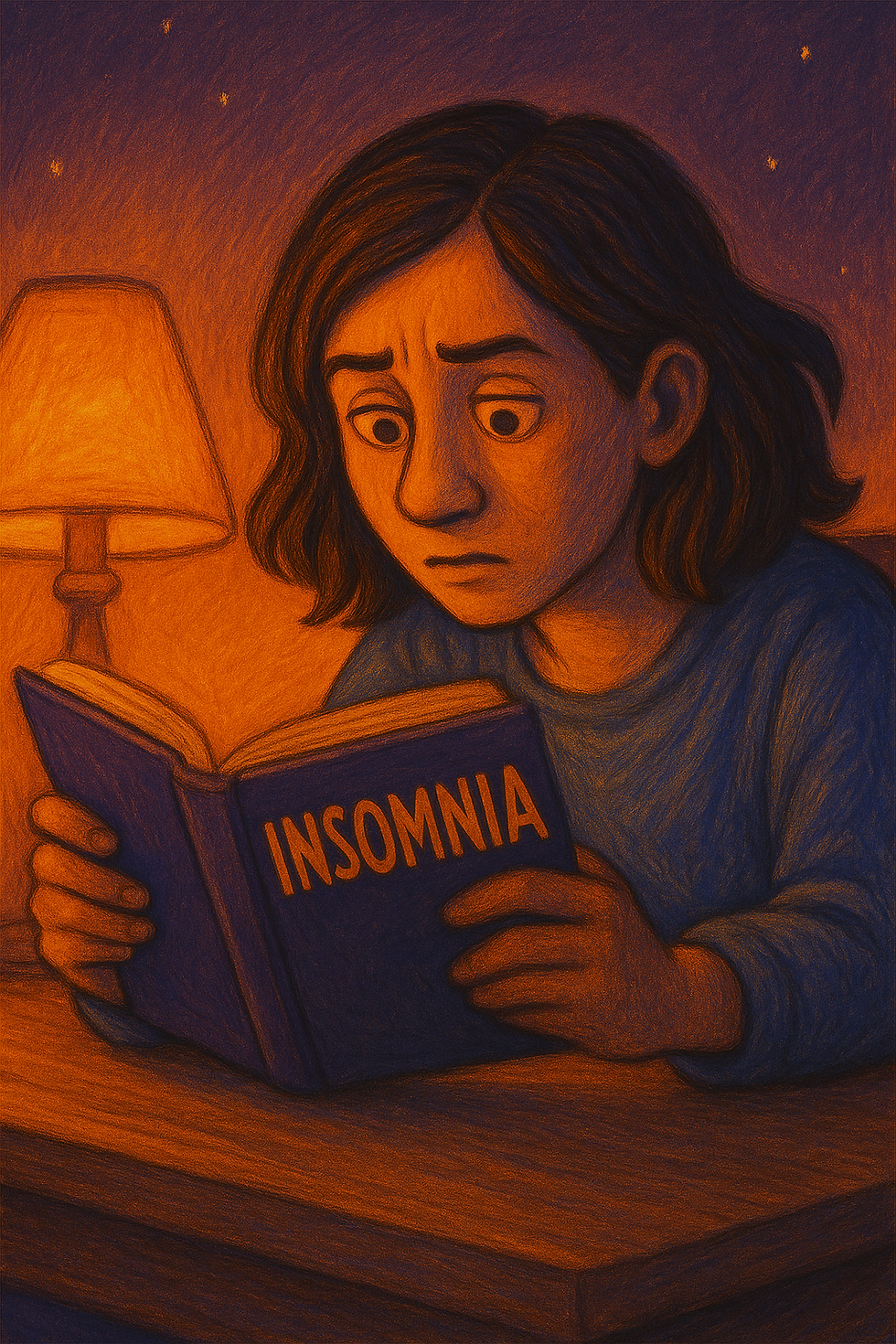
How do you know when you have insomnia?
Is it because you have X amount of hours of sleep?
Is it because you haven't been getting good sleep for X amount of weeks?
Is it because you "need" a lot of supplements to fall asleep?
How do you know for sure when you have insomnia?
I'm going to give a number of clinical criteria and definitions ranging from least to most helpful in terms of understanding it.
Insomnia Definition (DSM-5 vs vs my own)
Almost everyone has a vague sense of what insomnia is, but there are a lot of misconceptions about it. To get started understanding what insomnia is I'll give you some of the DSM-5 clinical criteria (The full list is too long to put here, you can find the full criteria in the source at the bottom).
Clinical Criteria of insomnia for DSM-5:
Includes criteria such as:
The sleep difficulty occurs at least 3 nights per week.
The sleep difficulty is present for at least 3 months.
The sleep difficulty occurs despite adequate opportunity for sleep
Now while this can be helpful for a medical practitioner to diagnose someone with insomnia I think some aspects of this criteria is arbitrary.
To borrow from my own struggles I was suffering from nights of no perceptible sleep less than one week after my struggle with insomnia started.
According to that clinical criteria I would not have insomnia.
However the struggle that I experienced in my first week of insomnia was exactly the same as the struggle I had right before I overcame insomnia for good over 7 years later.
My own definition of insomnia
In my opinion this is a more helpful definition of insomnia in terms of understanding the nature of the problem.
Insomnia is a fear (or some other negative emotion) problem, that results in a struggle problem, that then results in a sleep problem.
Please note:
It doesn't always have to be a fear problem, it can often be another negative emotion such as anger, frustration, hopelessness or maybe something as mild as curiosity.
Big picture we have some sort of non-acceptance around not getting sleep which causes us to fight for sleep.
Instead of asking ourselves if we're getting an arbitrary amount of hours of sleep, I think it would be more helpful to identify the sort of relationship we have with sleep.
How do I know if I have insomnia
To help you understand if you have an unhealthy relationship with sleep I'm going to give you a number of questions around commonly reported aspects of insomnia.
Do you think about sleep often?
Do you constantly try to figure out why you aren't sleeping?
Is insomnia gradually becoming a bigger and bigger part of your life?
Does it feel lonely and isolating as no one else seems to have this issue?
Do you wonder if you will have this forever?
Do you dread nighttime as it gets closer and closer to bedtime?
Do you experience periods during the night where you're not sure if you were sleeping, you might get weird "thinking dreams" where you aren't sure if you were dreaming or just thinking?
You find yourself avoiding things that used to give you joy out of fear they might harm your sleep drive.
Have you tried out a number of things to get sleep (sleep hygiene, supplements, etc.) and either see no results or inconsistent results?
These all reflect the typical insomnia struggle.
When to see a doctor for insomnia
I have no medical training and I cannot advise when someone should seek medical assistance. I never would want to discourage someone from seeking help from a medical professional if they feel that is appropriate.
What I can say is that it is very commonly reported that people suffering from insomnia usually do not get sustainable relief from their doctor. If you find that this is the case then I want to give you reassurance that this is also common for people suffering from insomnia.
The reason why they typically do not get long term sustainable relief from their doctor is because usually their doctor provides prescription medication to address it which doesn't address the underlying issue. Beyond that they will occasionally recommend CBT-I based treatment, which is better but also has it's own complications.
How do I get over insomnia?
The key to getting over this is to repair your relationship with sleep.
Sleep does not like being chased or sought after. Sleep is a natural, automatic process for us.
Sleep happens to us, we cannot force it to happen.
In a nutshell all we have to do is live our lives as if we didn't have insomnia.
If you suspect you have insomnia, remember you're not alone. Learn more strategies in my Somnus Principles guide or subscribe to my YouTube channel for practical tips.
Disclaimer: This is not medical advice but educational content.
John Navilliat
Head Coach of Insomnia to Peace
Certified graduate of sleep coach school.
Bachelors degree in psychology
I had chronic insomnia for over 7 years.
Sources:


Comments